How to Use Isopropyl Palmitate in Cosmetic Formulations?
Isopropyl Palmitate is an increasingly popular ingredient in cosmetic formulations. Its unique properties make it a valuable asset for formulators. This ester, derived from isopropyl alcohol and palmitic acid, acts as an emollient and skin-conditioning agent. It can effectively enhance the texture and spreadability of various products.
Incorporating Isopropyl Palmitate into a formulation can improve product performance. It offers a lightweight, non-greasy feel on the skin. This makes it suitable for a wide range of cosmetic applications, including creams, lotions, and serums. However, the balance of its concentration is crucial for optimal performance. Using too much can lead to a heavy residue, which can deter users.
Understanding the properties of Isopropyl Palmitate is essential for effective formulation. It’s not just about including it; it’s about using it wisely. Adjusting the concentration based on the desired product type can be challenging. Praise and critique often coexist, reflecting the intricacies of cosmetic formulation. Engaging with this ingredient requires experimentation and reflection to achieve the best results.
Understanding Isopropyl Palmitate: Composition and Properties
Isopropyl palmitate is an ester derived from isopropyl alcohol and palmitic acid. It is widely used in cosmetic formulations for its emollient properties. This ingredient enhances skin feel, making it softer and smoother. According to the International Journal of Cosmetic Science, isopropyl palmitate has a low comedogenic rating, making it suitable for various skin types.
Incorporating isopropyl palmitate into formulations can improve product penetration. Its lightweight texture allows for easy absorption into the skin. A study by Cosmetic Dermatology indicates that products containing isopropyl palmitate have increased hydration levels compared to those without. However, while it offers excellent benefits, some formulations may experience stability issues. This can lead to variability in performance over time.
Manufacturers should consider the concentration of isopropyl palmitate in their products. Higher concentrations can enhance skin feel but may also lead to a greasy finish. Striking the right balance is crucial. It's important to conduct stability testing before finalizing formulations. Relying solely on empirical data may not account for specific skin responses. Therefore, evaluating the ingredient's performance through consumer testing is recommended. This can provide valuable insights into user experience and overall product efficacy.
The Role of Isopropyl Palmitate in Cosmetic Formulations
Isopropyl Palmitate is a versatile ingredient in cosmetic formulations. It serves as an emollient, providing moisture and improving skin feel. This compound is derived from palm oil and is known for its ability to penetrate the skin effectively. Many formulators choose it for its light texture and non-greasy finish. The balance between hydration and smooth application makes it a valuable asset.
In addition to its moisturizing properties, Isopropyl Palmitate enhances the spreadability of products. It allows creams and lotions to glide effortlessly over the skin. However, its use requires careful consideration of formulation balance. Too much can lead to a greasy feel, while too little may not achieve the desired hydration levels. Thus, experimentation is key.
Formulators often face the challenge of finding the right concentration. Keeping track of how the final product feels can lead to better outcomes. The right levels depend on the specific formulation goals and target skin types. A small percentage can make a noticeable difference in texture and performance. Continuous evaluation during the formulation process helps in achieving the perfect consistency without compromising on effectiveness.
Recommended Concentrations for Effective Use of Isopropyl Palmitate
Isopropyl Palmitate is a versatile ingredient in cosmetics. Its benefits include emolliency, which helps moisturize the skin. According to data from the Personal Care Products Council, a concentration of 3% to 10% is generally effective for personal care formulations. This range allows for optimal absorption without leaving a greasy residue.
Formulators need to consider the stability of the product. High concentrations may cause instability or undesirable textures. A 5% concentration is often a safe starting point, providing moisturizing effects while ensuring a smooth application. Testing different ratios can lead to better results for specific formulations.
Additionally, manufacturers should be cautious. Inconsistent results can arise from varying raw material quality. Formulating with Isopropyl Palmitate requires attention to detail. Balancing its concentration with other ingredients is crucial. This helps achieve desired texture and effectiveness in products. Overall, careful experimentation can yield beneficial results in skincare applications.
Stability and Compatibility of Isopropyl Palmitate with Other Ingredients
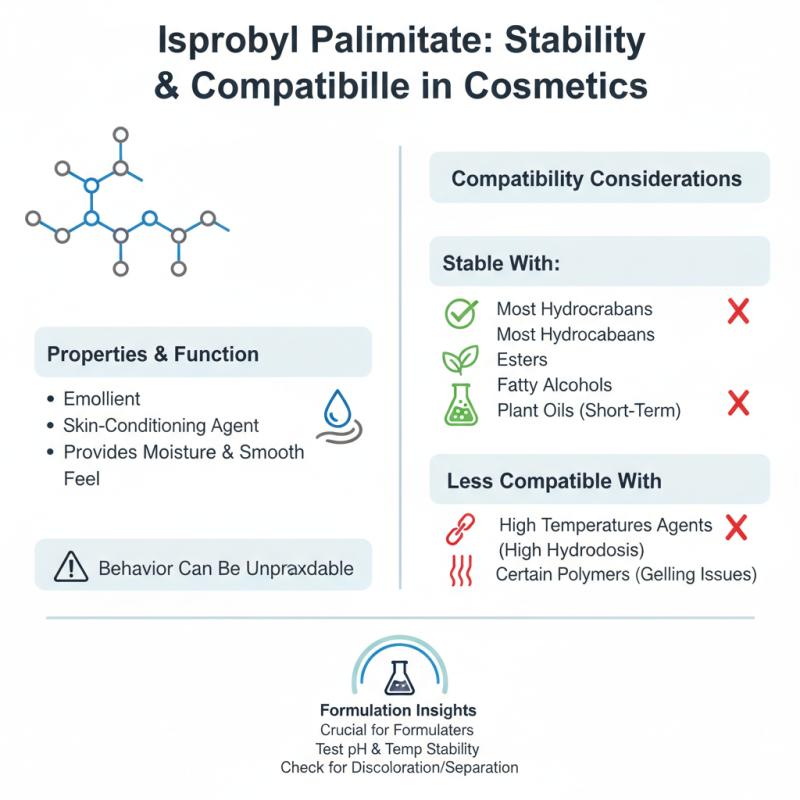
Isopropyl palmitate is a well-known emollient in cosmetic formulations. Understanding its stability and compatibility with other ingredients is crucial for formulators. It acts as a skin-conditioning agent, providing moisture and a smooth feel. However, its behavior in various conditions can be unpredictable.
When mixed with other emollients, such as oils and butters, isopropyl palmitate often enhances the stability of the formulation. However, it's sensitive to high temperatures. If exposed to excessive heat, it may degrade, impacting its efficacy. Testing formulations under different conditions is essential to ensure performance remains consistent.
Mixing isopropyl palmitate with active ingredients requires careful consideration. Certain actives might interact negatively, leading to reduced effectiveness. It's vital to conduct stability tests throughout the product's shelf life. By understanding its behavior in formulations, formulators can create innovative, effective products. There’s always room for improvement while navigating ingredient interactions.
Safety Assessments and Regulatory Considerations for Cosmetic Use
When incorporating isopropyl palmitate into cosmetic formulations, it's crucial to consider safety assessments. This ingredient acts as an emollient, enhancing texture and absorption. However, improper concentration can lead to skin irritation. Testing is essential before large-scale use.
It's important to stay informed about regulatory considerations. Different regions may have varying guidelines. Not every formulation is suitable for every skin type. Users should conduct patch tests to ensure compatibility. One often overlooked aspect is the thorough listing of ingredients. Transparency builds trust with consumers.
Tips: Always check for local regulations before formulating. Engage in open dialogue with suppliers about safety testing. Document all ingredient sources and their safety profiles. This practice not only ensures compliance but also demonstrates professionalism in formulation strategies.
Usage of Isopropyl Palmitate in Cosmetic Formulations