Leave Your Message

China Top 10 Liquid Thickener Suppliers?

China’s Liquid Thickener sector is becoming more specialized, competitive, and export-oriented. Suppliers now serve food processing, pharmaceuticals, cosmetics, coatings, mining, and water treatment. A clear liquid can still hide complex rheology, stability, and safety requirements.

Grand View Research estimates the global food thickening agents market reached approximately USD 13 billion in 2023. Its report also forecasts continued growth through 2030. MarketsandMarkets identifies hydrocolloids, including xanthan gum, guar gum, and cellulose derivatives, as key materials supporting this expansion. However, these figures cover broader thickener categories, not Liquid Thickener alone. That distinction matters.

Texture is the real test.

Food science writer Harold McGee states, “Texture is the feel of food in the mouth.” This simple observation explains why supplier selection cannot rely only on viscosity data. A thickener may reach 5,000 mPa·s in a laboratory beaker, yet fail after heating, storage, pumping, or dilution. Real production is less tidy.

This guide examines China’s top ten Liquid Thickener suppliers through practical criteria. These include formulation experience, raw-material control, customization, production capacity, testing systems, certifications, export performance, and after-sales support. Product samples also deserve attention. A smooth sauce, stable lotion, or evenly dispersed coating often reveals more than a polished brochure.

Some rankings remain subjective. Public data is uneven. Supplier claims should be verified carefully. Still, factory audits, technical documents, third-party testing, and customer feedback can expose meaningful differences. For buyers, the strongest partner is not always the largest manufacturer. Consistent quality, responsive engineering, and transparent documentation may matter more.
China Top 10 Liquid Thickener Suppliers?

What Is a Liquid Thickener and How Does It Work?

A liquid thickener increases viscosity, helping a product flow more slowly and remain stable. It may contain polymers, cellulose derivatives, starches, gums, or mineral particles. These materials interact with water and create a loose internal network. The network resists movement when the liquid is poured, pumped, or spread.

The mechanism depends on hydration, particle size, temperature, pH, and mixing speed. Some thickeners swell after absorbing water. Others link together through chemical attraction or physical entanglement. A paint may need smooth suspension, while a personal-care gel may require a soft, non-sticky feel. Detergent formulas often need stable viscosity during storage and pouring. Small changes matter.

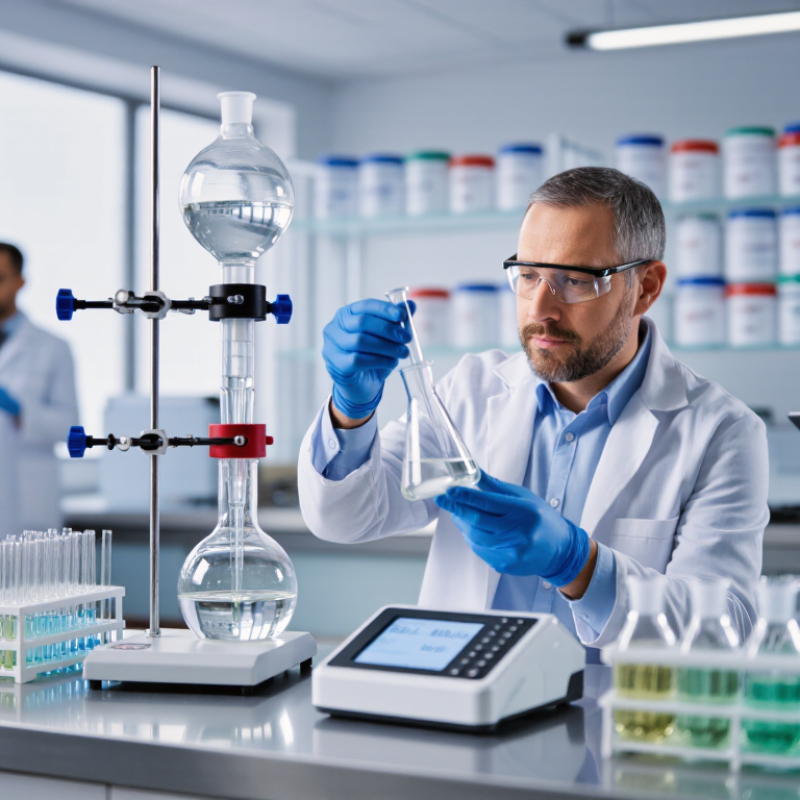
Testing should be practical and repeatable. I would measure viscosity at controlled temperature, then inspect the sample after resting for 24 hours. A simple spindle test can reveal whether the formula becomes thinner under shear. It should recover enough afterward. Overmixing may introduce air and produce misleading results. That mistake is easy to miss. A thick sample is not automatically a good sample. It can separate, feel stringy, or block a pump. Reliable suppliers should provide technical data, recommended dosage ranges, storage guidance, and safety documentation. Independent testing remains wise, because laboratory results may not match factory conditions.
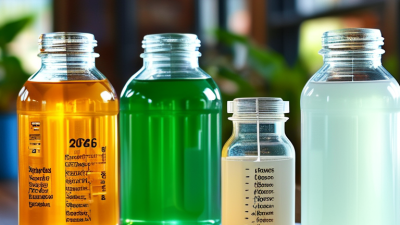
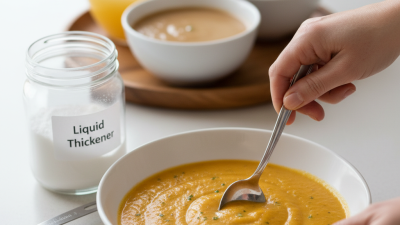
China Top 10 Liquid Thickener Suppliers? — What Is a Liquid Thickener and How Does It Work?

Liquid thickeners increase a formulation’s viscosity by building a polymer network, binding water, or modifying the flow behavior of a liquid. The chart shows representative midpoint concentrations commonly used for several thickener classes in water-based formulations. Actual dosage depends on the raw material, pH, temperature, salt level, shear conditions, and desired texture.

Major Types of Liquid Thickeners Available in China

China Top 10 Liquid Thickener Suppliers?

Major Types of Liquid Thickeners Available in China

China’s liquid thickener market covers several functional families. Xanthan gum is widely used in sauces, beverages, cosmetics, and household liquids. It provides strong viscosity at low concentrations and remains effective during shaking. Carboxymethyl cellulose gives smooth body and helps control separation. It is common in foods, detergents, and water-based formulations. Hydroxypropyl methylcellulose supports suspension and film formation. It often suits personal care and construction mixtures.

Modified starch thickeners create a soft, familiar texture in food applications. They may perform differently after heating, cooling, or freezing. Carrageenan and alginate are useful when gel structure or suspension is required. Their performance depends heavily on salts, acidity, and processing temperature. Acrylic polymer thickeners can produce clear, high-viscosity gels for cosmetics and industrial products. They usually require careful pH adjustment.

In practical sourcing, buyers should request viscosity data, moisture content, particle size, and recommended dosage. A small laboratory sample can reveal more than a polished catalogue. Test the material in the final formula, not only in water. Check batch consistency, traceability, safety documentation, and production standards. Food-grade, cosmetic-grade, and industrial-grade materials are not interchangeable. Some suppliers provide excellent technical support, while others respond slowly after payment. That risk deserves attention. A low price may hide higher dosage, unstable viscosity, or longer preparation time. Clear testing records make supplier comparisons more reliable, although no single thickener works perfectly everywhere.

China Top 10 Liquid Thickener Suppliers? - Major Types of Liquid Thickeners Available in China

Major liquid-thickening ingredient types commonly supplied for water-based formulations in China

No. Liquid Thickener Type Chemical / Functional Class Common Supply Form Typical Use Level Suitable Formulation Range Typical Applications Key Performance Features
1 Xanthan Gum Microbial polysaccharide Free-flowing powder; pre-dispersed liquid grades 0.1–1.0% Approximately pH 2–12 Food sauces, beverages, personal care, coatings, detergents High efficiency, strong suspension, pseudoplastic flow, good salt tolerance
2 Carboxymethyl Cellulose (CMC) Water-soluble cellulose ether Powder; aqueous solution 0.2–2.0% Approximately pH 5–10 Food, toothpaste, detergents, paper coatings, textile sizing Viscosity building, water retention, film formation, particle stabilization
3 Hydroxyethyl Cellulose (HEC) Nonionic cellulose ether Powder; liquid dispersion 0.2–2.0% Approximately pH 3–11 Latex paints, construction chemicals, shampoos, lotions, drilling fluids Good electrolyte compatibility, smooth rheology, water retention, nonionic stability
4 Hydroxypropyl Methylcellulose (HPMC) Modified cellulose ether Powder; pre-hydrated solution 0.2–3.0% Approximately pH 5–11 Tile adhesives, mortars, gypsum products, cosmetics, pharmaceutical liquids Thickening, water retention, suspension, lubricity and protective colloid action
5 Carbomer Cross-linked polyacrylic acid polymer Fine powder; pre-neutralized gel 0.1–1.0% Best performance usually near pH 5–10 Gels, creams, hand sanitizers, household cleaners, pharmaceutical formulations Very high thickening efficiency, clear gels, yield value and suspension support
6 Guar Gum Natural galactomannan polysaccharide Powder; hydrated liquid dispersion 0.2–1.0% Approximately pH 4–10 Food products, hair conditioners, shampoos, textile printing, oilfield fluids Rapid hydration, high viscosity, water binding and conditioning effect
7 Sodium Alginate Marine-derived alginate polysaccharide Powder; aqueous solution 0.2–1.5% Approximately pH 4–10 Food sauces, beverages, textile printing, wound-care and encapsulation systems Film formation, controlled gelation with calcium ions, suspension and stabilization
8 Carrageenan Seaweed-derived sulfated polysaccharide Powder; liquid premix 0.2–1.0% Typically used around pH 4–10 Dairy drinks, plant-based beverages, jellies, sauces and processed foods Thickening, suspension, texture control and gel formation with selected salts
9 Modified Starch Physically or chemically modified starch Powder; instant cold-water-dispersible grades 1.0–5.0% Often used around pH 4–8 Soups, sauces, dressings, coatings, paper processing and textile applications Cost-efficient body building, water binding, texture enhancement and film formation
10 Associative Acrylic Rheology Modifier Hydrophobically modified water-soluble polymer Aqueous emulsion; liquid concentrate 0.2–3.0% Commonly used around pH 6–10 Architectural coatings, industrial paints, cleaners and personal care products Excellent flow control, viscosity adjustment, leveling and shear-thinning behavior

Note: Use levels and pH ranges are general formulation guidelines. Actual performance depends on grade, molecular weight, temperature, salts, surfactants, processing sequence and the final application.

How to Evaluate Liquid Thickener Suppliers

How to Evaluate Liquid Thickener Suppliers

China’s liquid thickener market deserves careful technical screening, not only a supplier ranking. MarketsandMarkets projected the global hydrocolloids market to reach about USD 14.9 billion by 2028. This growth increases supplier choices, but also creates uneven quality. Request a current COA, SDS, specification sheet, and batch traceability record. Check viscosity, pH, solids content, density, and microbial limits. These figures should match your application, not merely a sales sample.

Ask for samples from three production batches. Test them under your real temperature, shear, and storage conditions. A thickener may perform well at 25°C but weaken after heating or prolonged mixing. Review production capacity, minimum order quantity, lead time, packaging, and export experience.

Grand View Research identifies food, pharmaceuticals, and personal care as major hydrocolloid application areas, each requiring different purity and documentation controls. A supplier serving one sector may not understand another.

Price comparisons can mislead. Calculate dosage, waste, freight, testing, and reformulation costs. Request references from comparable applications, while verifying them independently. I would not accept “consistent quality” without measurable limits. That sounds simple. It is not.

Some suppliers provide excellent samples but weaker mass production. My own evaluation would include a pilot order, incoming inspection, and a written corrective-action process. One weakness remains: public reports often group liquid and dry thickeners together, so their market figures cannot replace product-level testing.

China’s Top 10 Liquid Thickener Suppliers

China’s Top 10 Liquid Thickener Suppliers are increasingly judged by performance, not catalog size. Grand View Research valued the global hydrocolloids market at about USD 11.6 billion in 2023, with continued growth expected through 2030. This demand covers food, personal care, coatings, detergents, and industrial fluids. China’s manufacturing base offers broad capacity, but capacity alone proves little.

For this supplier comparison, buyers should examine viscosity curves, active solids, pH stability, and shear recovery. A reliable supplier should provide batch-specific certificates, technical data sheets, and traceable production records. In food applications, testing should include salt tolerance and freeze-thaw behavior. In coatings, a practical trial may involve a 24-hour viscosity check at 25°C. Small details matter.

Procurement teams often focus on price first. That can be a costly mistake. The 2024 IMARC market analysis identifies food additives as a major growth area in China, increasing pressure for consistent quality and regulatory documentation. Supplier audits should review laboratory equipment, sample retention, packaging conditions, and complaint response times. Ask for recent third-party test results. Do not rely only on polished samples. Some products look stable in a short trial, then separate after storage. That is easy to miss. A stronger shortlist balances technical evidence, delivery reliability, application support, and transparent communication.

Applications, Quality Standards, and Export Considerations

Liquid thickener suppliers are judged by performance, not catalogue size. Their materials support sauces, beverages, dairy products, cosmetics, and oral-care formulations. Grand View Research reported that the global food additives market reached about USD 42.6 billion in 2023, with steady growth expected through 2030. This growth increases demand for stable, traceable thickening systems.

Application testing should measure viscosity at different temperatures, shear rates, and storage periods. A sauce that pours smoothly at 25°C may become stringy after refrigeration. Suppliers should provide batch numbers, allergen statements, technical data sheets, and certificates of analysis. ISO 22000-based food safety systems add useful control points, but certificates alone are not enough. I would request retained samples and independent microbial testing. Small omissions matter.

Export buyers must check destination-country rules before selecting a liquid thickener. Codex Alimentarius and FAO/WHO JECFA evaluations provide internationally recognized guidance for many food additives, including acceptable-use conditions. However, “ADI not specified” does not remove labeling or documentation duties. The 2024 WTO World Trade Report highlights how regulatory differences can increase trade complexity, even when products are technically safe. Export documents should match the commercial invoice, packing list, safety data sheet, and certificate of origin. Incoterms, shelf life, drum leakage tests, and temperature exposure deserve equal attention. A supplier may pass a laboratory test yet fail during a humid sea shipment. That risk is easy to underestimate.