What are Polysorbate Emulsifiers and Their Uses?
Polysorbate emulsifiers play a crucial role in various industries, particularly in food and cosmetics. Their unique ability to blend oil and water makes them essential in formulating products with a stable texture. Dr. Emily Carter, a well-respected expert in food science, states, “Polysorbate emulsifiers simplify complex formulations, enhancing product quality and consumer experience.”
These emulsifiers are derived from sorbitol and fatty acids. They are widely used in salad dressings, sauces, and ice creams. Polysorbate emulsifiers also aid in enhancing the shelf life of these products. However, the use of these compounds raises questions about long-term health effects. Some consumers express concern over artificial ingredients in their food.
Despite their benefits, not all polysorbate emulsifiers are created equal. It is essential to understand the quality and sourcing of these ingredients. As the industry grows, so does the need to evaluate their impact on health and the environment. A careful approach is necessary to balance product development and consumer safety, ensuring that polysorbate emulsifiers continue to serve beneficial roles in our daily lives.

Definition and Composition of Polysorbate Emulsifiers
Polysorbate emulsifiers are important compounds used in various industries, primarily food and cosmetics. These emulsifiers are derived from sorbitol and fatty acids. Their structure allows them to interact with both water and oil, resulting in stable, homogenous mixtures. Composed of ethylene oxide and fatty acid esters, polysorbates work as surfactants. They reduce surface tension and help blend ingredients that normally separate.
In food production, these emulsifiers improve texture and shelf life. They help create a smooth consistency in processed foods like ice cream and salad dressings. In cosmetics, polysorbates stabilize emulsions in creams and lotions, ensuring they maintain their intended texture over time. While polysorbates are generally recognized as safe, there are ongoing discussions regarding their long-term health effects. Some researchers question the implications of regular consumption and exposure. Therefore, consumers should be informed and cautious about how much they use in their diets and beauty routines.
Types of Polysorbate Emulsifiers and Their Chemical Structures
Polysorbate emulsifiers are vital in many industries. They help mix water and oil, creating stable products. These emulsifiers are derived from sorbitol and fatty acids. Their chemical structures consist of a hydrophilic head and a hydrophobic tail. This unique combination allows them to function effectively in various applications.
Different types of polysorbate emulsifiers exist. For example, Polysorbate 20, with a fatty acid chain length of 12, is used in food products. In cosmetics, Polysorbate 80, with a longer chain, enhances product texture and stability. Each type has its specific uses based on its structure and properties.
Tips: When selecting an emulsifier, consider the formulation. The right choice can affect texture and shelf life. Testing different types helps identify the best fit for your needs. Be mindful of how each emulsifier interacts with other components in the product. Sometimes, the best results come from unexpected combinations.
What are Polysorbate Emulsifiers and Their Uses?
| Type of Polysorbate |
Chemical Structure |
Common Uses |
| Polysorbate 20 |
C58H114O26 |
Used in food, cosmetics, and pharmaceuticals as an emulsifier. |
| Polysorbate 40 |
C58H114O26 |
Commonly used in beverages and salad dressings. |
| Polysorbate 60 |
C58H114O26 |
Widely used in bakery products and ice creams. |
| Polysorbate 80 |
C64H124O26 |
Used in the food industry, cosmetics, and pharmaceuticals. |
| Polysorbate 20 |
C58H114O26 |
Used in creams and lotions to stabilize emulsions. |
Mechanism of Action: How Polysorbate Emulsifiers Work
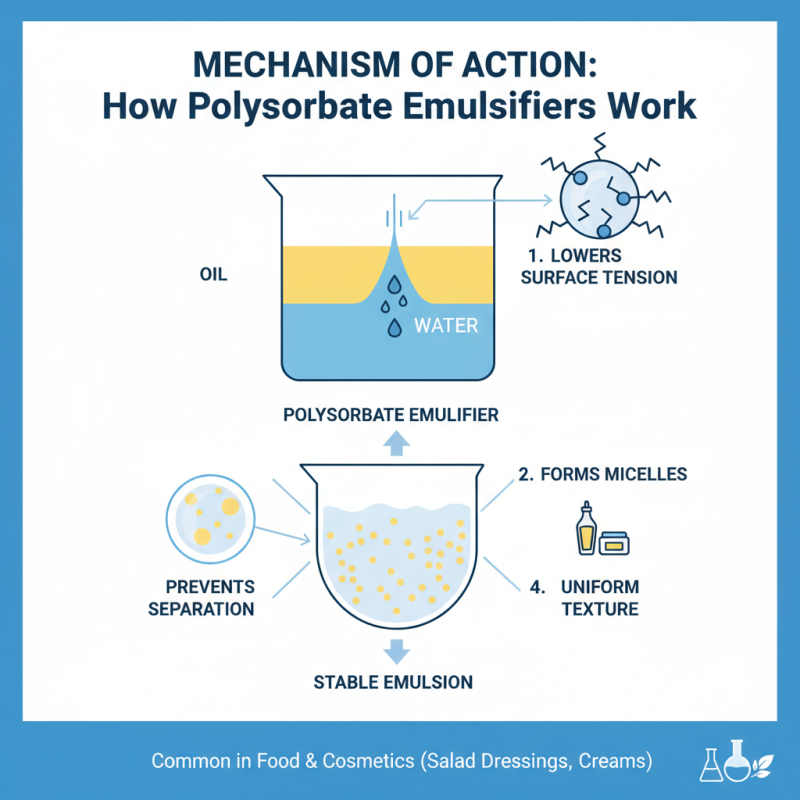
Polysorbate emulsifiers are vital in various industries, especially in food and cosmetics. Their primary role is to stabilize mixtures of oil and water, preventing separation. By lowering the surface tension between the two phases, these emulsifiers create a uniform texture in products. They are commonly found in salad dressings and creams, enhancing both appearance and consistency.
The mechanism of action for polysorbate emulsifiers involves their unique structure. Comprising hydrophilic (water-attracting) and hydrophobic (oil-attracting) parts, they act at the interface of oil and water. When added, they surround small droplets of oil, allowing them to disperse evenly in water. This process can be seen in mayonnaise, where oils are consistently blended. However, the effectiveness of emulsifiers can vary based on the product's formulation and processing methods.
Understanding the limitations of polysorbate emulsifiers is also crucial. Not all emulsifiers work equally well with every ingredient. Sometimes, they may not achieve the desired stability. Experimentation may be necessary to find the right balance in formulations. This trial-and-error approach reflects the complexity of creating stable emulsions in practical applications.
Common Applications of Polysorbate Emulsifiers in Food and Cosmetics
Polysorbate emulsifiers are essential in both food and cosmetics. They help mix oils and water, creating stable emulsions. In food products, they enhance texture and improve shelf life. Common examples include dressings, sauces, and ice creams. They ensure a smooth, creamy mouthfeel, making these foods more palatable.
In cosmetics, polysorbates act as surfactants. They help blend oils, fragrances, and water. This enhances product stability and effectiveness. Creams and lotions often contain them for a better application and feel on the skin. The versatility of polysorbate emulsifiers allows formulations to remain consistent over time.
**Tip:** When choosing products with polysorbates, consider your skin type or dietary restrictions. Not all emulsifiers suit everyone.
Some concerns arise with polysorbates. They can sometimes cause irritation in sensitive skin. Additionally, there is ongoing research into their potential effects on health. It’s wise to pay attention to your body's reactions.
**Tip:** Always patch-test new skincare items. This simple step can save you from potential irritation.
Uses of Polysorbate Emulsifiers in Food and Cosmetics
This chart illustrates the common applications of Polysorbate emulsifiers across various industries, highlighting their prevalence in food products, cosmetics, pharmaceuticals, and industrial applications. The percentages represent the estimated frequency of use in these sectors.
Safety and Regulatory Considerations for Polysorbate Emulsifiers
Polysorbate emulsifiers are widely used in food, cosmetics, and pharmaceuticals. They help to stabilize mixtures of oil and water, improving texture and consistency.
Safety and regulatory considerations are crucial for these substances. The FDA recognizes polysorbates as Generally Recognized As Safe (GRAS) when used within established limits. However, long-term safety is still under scrutiny.
Recent studies indicate potential health risks. For example, the European Food Safety Authority is assessing the impact of polysorbate intake on gut health. Reports suggest a link between excess polysorbate consumption and altered gut microbiota. Monitoring intake levels is essential for consumers and manufacturers alike.
Regulatory bodies worldwide are defining usage guidelines. While current data support limited use, some experts caution against over-reliance on emulsifiers. They argue that natural alternatives might offer safer options. As research progresses, understanding the balance between functionality and safety must be a priority for the industry.