Why Choose Polysorbate Emulsifiers for Your Formulations?
Polysorbate emulsifiers play a vital role in diverse formulations. According to Dr. Emily Schmidt, an industry expert at Emulsifier Innovations, "Polysorbate emulsifiers provide unmatched stability in complex mixtures." This points to their significant value in food, cosmetics, and pharmaceuticals.
These emulsifiers ensure that oil and water blend seamlessly, enhancing texture and stability. They prevent separation, making products reliable. In personal care formulations, Polysorbate emulsifiers create silky textures that consumers love. Their ability to maintain consistency is crucial for product success.
However, challenges exist. Not all formulations respond the same way. Variations in ingredient interactions can lead to unexpected results. Manufacturers must remain mindful of this when incorporating Polysorbate emulsifiers. Balancing effectiveness with formulation goals requires experience and knowledge. The reliability of Polysorbate emulsifiers, while evident, demands careful consideration in every formulation process.

Overview of Polysorbate Emulsifiers and Their Properties
Polysorbate emulsifiers are essential in many formulations, especially in the food and cosmetic industries. These compounds are derived from sorbitol and fatty acids, providing excellent emulsifying properties. They help stabilize oil and water mixtures, creating a smooth and consistent texture. This quality is vital in products like salad dressings, creams, and lotions.
One notable property of polysorbate emulsifiers is their ability to enhance the bioavailability of ingredients. They can improve the absorption of active compounds in formulations. This makes them valuable for delivering nutrients effectively. However, their effectiveness can vary based on concentration and formulation specifics. It's important to optimize these variables for best results.
Polysorbate emulsifiers also exhibit low toxicity and high stability. Nonetheless, some formulations may experience mild reactions. It's crucial to conduct thorough testing to ensure compatibility with other ingredients. Awareness of potential sensitivity is needed. Balancing efficacy and safety is key when using polysorbate emulsifiers in your products.
Key Benefits of Using Polysorbate Emulsifiers in Formulations
Polysorbate emulsifiers are gaining traction in various formulations due to their impressive properties. These emulsifiers can stabilize oil and water mixtures effectively, resulting in smoother textures. According to a 2022 report from the International Journal of Cosmetic Science, formulations using polysorbates show an increased shelf life by up to 40%. This stability is crucial for products exposed to varying temperatures and storage conditions.
One notable advantage of polysorbate emulsifiers is their ability to enhance bioavailability. Research indicates that they can increase the absorption rates of active ingredients by up to 50%. This is vital in sectors like pharmaceuticals and nutraceuticals, where the efficacy of the formulation directly impacts health outcomes. Despite their benefits, some formulators face challenges with polysorbates, such as potential skin irritation in sensitive populations.
The widespread use of polysorbate emulsifiers can be linked to their versatility. They are applicable in food, cosmetics, and pharmaceuticals. Yet, formulators must remain vigilant about dosage and potential interactions with other ingredients. Understanding these nuances can lead to better, safer products. The industry is always evolving, and with it, the need for continuous assessment of these critical ingredients.
Why Choose Polysorbate Emulsifiers for Your Formulations? - Key Benefits of Using Polysorbate Emulsifiers in Formulations
| Benefit |
Description |
Applications |
| Improved Stability |
Polysorbate emulsifiers help stabilize oil-water mixtures, preventing separation and extending shelf life. |
Cosmetics, food products |
| Enhanced Texture |
These emulsifiers contribute to a smooth, creamy texture that improves user experience. |
Lotions, creams |
| Versatile Use |
Polysorbates can be used in a variety of formulations, making them highly adaptable for different products. |
Pharmaceuticals, personal care |
| Non-toxic |
They are generally recognized as safe (GRAS) for consumption, making them suitable for food products. |
Food formulations, dietary supplements |
| Ease of Incorporation |
Polysorbate emulsifiers can be easily mixed with other ingredients, streamlining the manufacturing process. |
Cosmetic formulations, industrial applications |
Applications of Polysorbate Emulsifiers in Different Industries
Polysorbate emulsifiers find diverse applications across industries, enhancing product stability and texture. In the food sector, they act as emulsifying agents in sauces, dressings, and baked goods. These emulsifiers ensure a smooth, consistent blend of oil and water components, crucial for overall quality. In cosmetics, polysorbates contribute to the creamy texture of lotions and creams. They help in dispersing active ingredients evenly, ensuring efficient delivery to the skin.
Tips: When selecting polysorbate emulsifiers, consider the desired application temperature. Lower temperatures may require different formulations than higher ones. Testing small batches can prevent larger issues down the line.
In pharmaceuticals, polysorbate emulsifiers stabilize emulsions in ointments and injectable solutions. Their ability to solubilize oil-based active ingredients enhances bioavailability. This is vital for patient compliance and product effectiveness. However, careful formulation is essential; improper ratios can lead to separation or inconsistent textures.
Tips: Regularly evaluate your formulations for stability. Adjusting the ratio of emulsifiers can yield significant improvements in product performance. Always document changes to track their impact effectively.
Comparing Polysorbate Emulsifiers to Other Emulsifying Agents
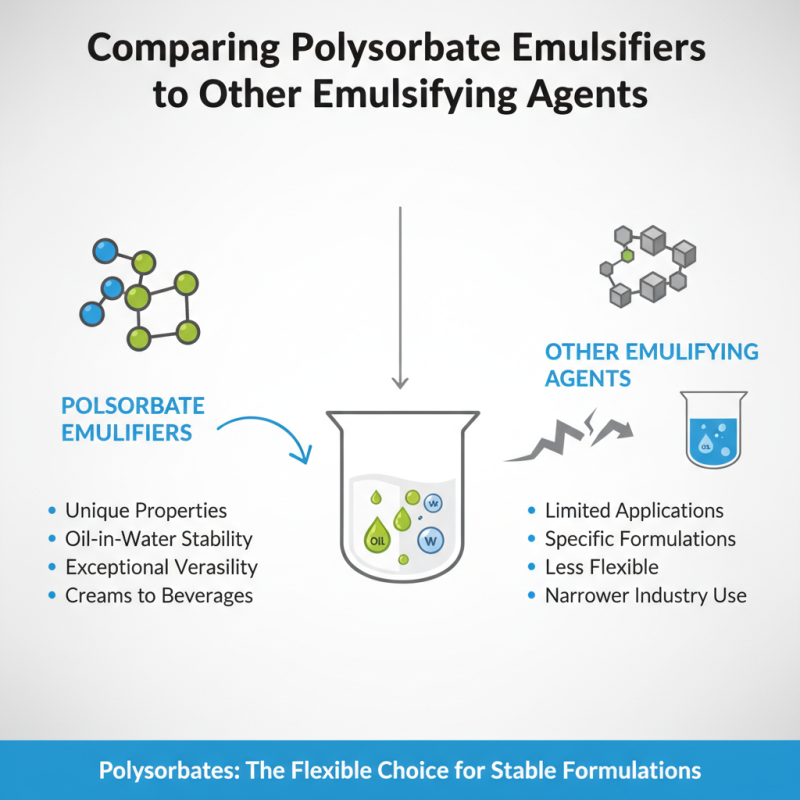
Polysorbate emulsifiers stand out in formulation due to their unique properties. They help create stable mixtures of oil and water. Compared to traditional emulsifying agents, polysorbates are more versatile. They can stabilize a broad range of formulations, from creams to beverages. This flexibility makes them a popular choice in many industries.
Research shows that polysorbate 80, for example, exhibits excellent emulsifying properties. A study by the Journal of Applied Polymer Science revealed that polysorbate 80 could achieve a lower interfacial tension. This characteristic can lead to more stable emulsions compared to other emulsifiers like lecithin or glyceryl monostearate. Some formulations may still experience instability when subjected to varying temperatures. This limitation can lead to a revision of the formulation process to ensure robustness.
Another consideration is the regulatory aspect of emulsifiers. Polysorbates are generally recognized as safe by health authorities. However, some consumers express concerns about synthetic ingredients. Therefore, formulators need to balance functionality and consumer perception. This challenge requires ongoing dialogue with stakeholders and research to address concerns effectively.
Best Practices for Incorporating Polysorbate Emulsifiers into Products
Polysorbate emulsifiers are versatile ingredients that enhance the stability of formulations. When incorporating these emulsifiers into products, it’s important to follow best practices to ensure optimal performance. Understanding how polysorbates interact with other ingredients can help prevent separation and improve texture.
One tip is to start with a small amount. Gradually increase the polysorbate concentration. This allows for better control over the emulsification process. Mixing at the right temperature is crucial. A warm environment can enhance solubility and ensure thorough blending with oil and water phases.
Keep in mind that not all formulations will react the same way. Testing different ratios is part of the learning process. Observe how the emulsifiers behave at various pH levels. Adjustments may be necessary, especially in sensitive formulations like skincare. Be prepared for unexpected results and refine your methods accordingly. These considerations are essential for creating products that meet consumer expectations.