How to Choose the Best Pet Cleaner for Your Needs?
Choosing the right Pet Cleaner can significantly impact your home environment. According to a recent report by the American Pet Products Association, nearly 67% of U.S. households own a pet, which makes effective cleaning solutions essential. Pet messes can lead to odors and unhealthy indoor air quality. Thus, selecting the best cleaner tailored to your needs is crucial.
The market offers a variety of products, ranging from enzymatic cleaners to steam cleaners. A survey by Pet Product News found that 84% of pet owners prefer eco-friendly options. However, not all cleaners are suitable for every pet type or surface. It’s key to understand your specific needs.
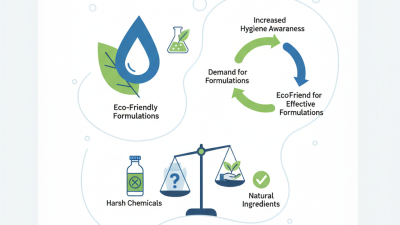
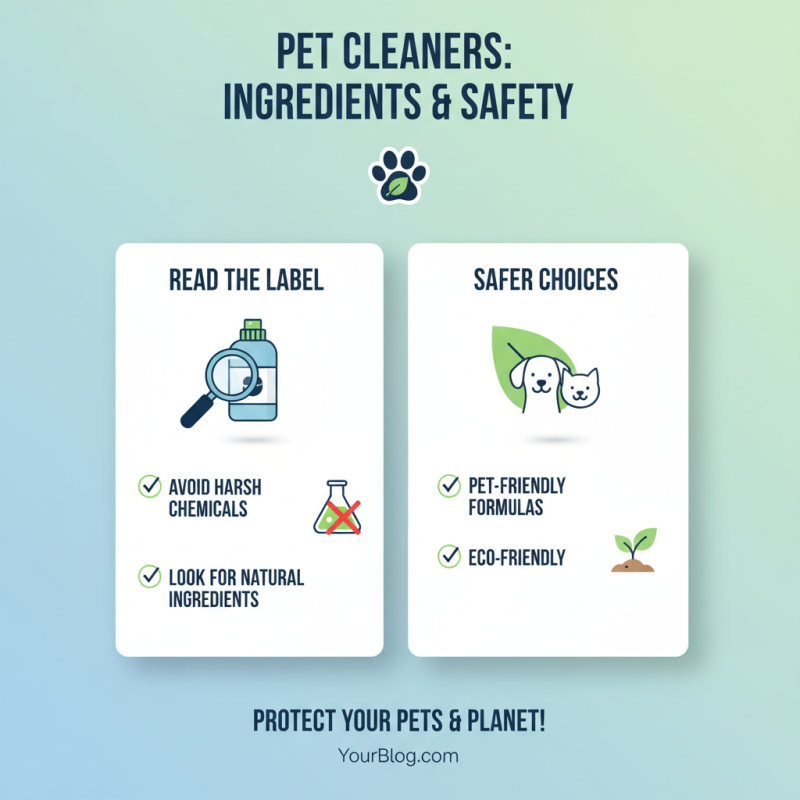
Many pet cleaners promise efficiency, but not all deliver on this promise. Finding the right balance between effectiveness and safety is often a challenge. Products containing harsh chemicals can compromise indoor air quality and pose health risks. Consider your pet’s unique needs when making a choice. Evaluating options carefully can lead to a healthier and cleaner living space for you and your furry friends.
Factors to Consider When Choosing a Pet Cleaner
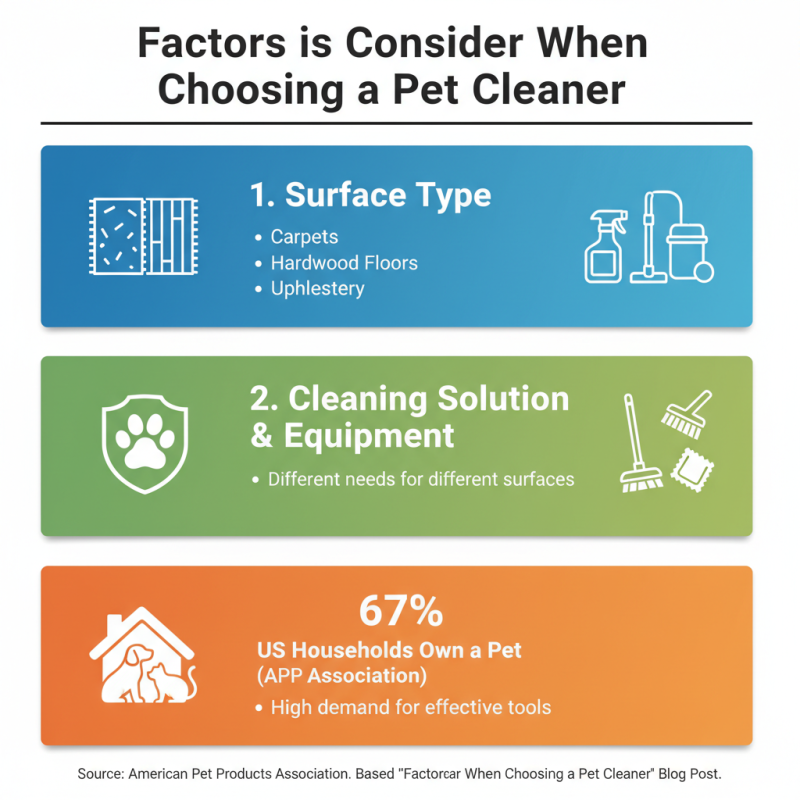
Choosing the right pet cleaner involves several key factors. One of the most important aspects is the type of surfaces you need to clean. Carpets, hardwood floors, and upholstery require different cleaning solutions and equipment. According to the American Pet Products Association, 67% of U.S. households own a pet. This high statistic leads to a significant demand for effective cleaning tools tailored for various surfaces.
Another vital consideration is the cleaner's formulation. Many pet cleaners contain enzymes or natural ingredients that break down stains and odors effectively. A study published in the Journal of Cleaner Production highlighted that biodegradable cleaners are not only environmentally friendly but also safe for pets. This safety factor is crucial for households with curious animals who might come into contact with residues.
Cleaning frequency also impacts the choice of cleaner. Regular use of a cleaner designed for heavy-duty stains can wear out surfaces faster. A survey by Pet Center reported that pet owners clean their homes, on average, three times a week. Understanding your cleaning habits can guide you in selecting cleaners that meet your needs without causing damage. Balancing cleaning power and surface safety is essential for maintaining your home and ensuring a healthy environment for your pets.
Types of Pet Cleaners Available on the Market
When selecting a pet cleaner, understanding the various types available is vital. Different situations require different solutions. The market offers a range of pet cleaners, such as enzyme cleaners, steam cleaners, and vacuum cleaners designed specifically for pet hair and dander. According to a report by the American Cleaning Institute, over 60% of pet owners express dissatisfaction with inadequate cleaning solutions. This highlights the need to choose a product that can effectively combat pet-related messes.
Enzyme cleaners are particularly effective for organic stains and odors. They work by breaking down proteins and fats that contribute to unpleasant smells. Many pet owners prefer these because they are non-toxic and safe for use around animals. However, they may take time to show results, which can be frustrating for those seeking immediate relief.
On the other hand, steam cleaners offer a powerful alternative. They kill bacteria and allergens with high temperatures, providing deep cleaning without chemicals. The International Journal of Environmental Science and Technology notes that steam cleaners can reduce up to 99.9% of bacteria. However, the effectiveness can vary based on the type of surface being cleaned. It’s important to consider these variables when looking for the best option. An ideal cleaner should fit your needs, taking into account the types of messes your pets create most frequently.
Assessing Your Pet's Specific Cleaning Needs
When assessing your pet's specific cleaning needs, consider their behavior and shedding. Different breeds have varying levels of fur and dander. For instance, a large, long-haired dog may require more regular cleaning than a small, short-haired cat. Understand how your pet interacts with their environment. Do they track dirt from outside? Do they have accidents indoors? Knowing these habits helps determine the right cleaning solution.
Evaluate the types of messes you encounter regularly. Some pets may be prone to specific issues, like vomit or urine stains. Identifying these patterns is important. A cleaner that tackles tough odors and stains effectively is essential for households with pets. Also, consider your home environment. If you have carpets, you may need a deep cleaner. On the other hand, hard surfaces require different cleaning agents.
Pay attention to how your pet reacts to cleaning products. Some animals are sensitive to strong chemicals. Testing a small area first is wise. Your pet's comfort is crucial. Opt for cleaners that are safe for both them and your living space. Understanding these elements ensures that you choose the best pet cleaner tailored to both your needs and those of your furry friends.
Pet Cleaner Effectiveness by Pet Type
Budgeting for Your Pet Cleaning Solutions
When budgeting for pet cleaning solutions, consider your pet's specific needs. Different pets may require different cleaning products. If you have a dog, a good enzymatic cleaner can be helpful. Cats might have unique issues, like litter box odors. Knowing these details can guide you toward practical spending.
Prioritize quality over brand names. Sometimes, cheaper options don’t perform well. Investing a bit more might save you money in the long run. A reliable, powerful cleaner can tackle tough stains and odors effectively. However, be cautious of overcommitting your budget. It’s wise to identify products that provide essential benefits without excessive spending.
Don’t forget to account for regular maintenance. In addition to cleaners, you might need grooming tools or air purifiers. Allocating a budget for these items can improve your pet's environment. A neat, clean space contributes to overall well-being. Reflect on how much you typically spend and assess if it meets your current needs.