Leave Your Message
Buying xanthan gum wholesale looks simple until quality, documentation, and delivery details begin to matter. Xanthan Gum Soft is valued for its smooth dispersion, viscosity control, and reliable performance in food, cosmetics, and industrial formulations. However, “soft powder” is not a universal technical grade. Buyers must confirm particle size, moisture, viscosity, purity, and intended application before comparing prices.
Industry reports show steady demand, but their numbers are not identical. Grand View Research estimated the global xanthan gum market at approximately USD 1.04 billion in 2023, with projected growth through 2030. MarketsandMarkets has also forecast continued expansion, supported by processed foods, personal care products, and pharmaceutical applications. These differences deserve attention. Report methods, product definitions, and regional coverage can change the final estimate.
Quality should lead the conversation.
A dependable supplier should provide a current specification sheet, certificate of analysis, safety data sheet, allergen statement, and traceability information. Buyers should also review recognized standards, including JECFA specifications for xanthan gum, commonly identified as INS 415. Practical checks matter too: observe whether the powder forms lumps after storage, disperses evenly in water, and matches the stated viscosity range. A low quotation may hide higher costs from inconsistent batches, rejected shipments, or unsuitable packaging. The following seven tips explain how to assess suppliers, verify Xanthan Gum Soft quality, compare wholesale terms, and reduce avoidable purchasing risks. One point remains easy to miss: the best supplier is not always the cheapest one.
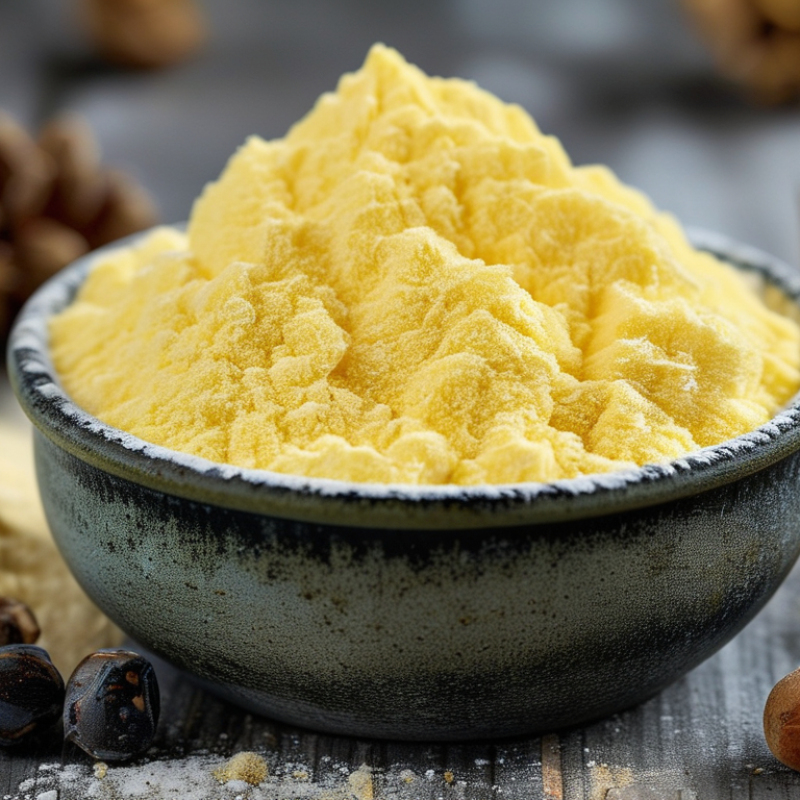
Xanthan gum soft powder is a finely milled hydrocolloid used as food additive E415. Its CAS number is 11138-66-2. Manufacturers produce it through microbial fermentation, followed by drying and milling. The powder hydrates in water and forms a stable, viscous solution. It can thicken sauces, suspend particles, stabilize emulsions, and improve texture. Its pseudoplastic flow makes products pour easily after shaking.
The FAO/WHO JECFA specification lists xanthan gum with an acceptable daily intake of “not specified” under good manufacturing practice. EFSA’s 2017 re-evaluation reported no safety concern at assessed uses. A 2024 market analysis estimates the global xanthan gum market will grow at roughly 5% annually through 2030. That growth increases the need for disciplined wholesale checks. Market demand alone proves nothing.
Buyers should treat “soft powder” as a handling description, not a full quality grade. Request viscosity data at a stated concentration, moisture limits, mesh size, pH, ash, microbial counts, heavy metals, and allergen information. A certificate of analysis should match the lot number. Check hydration speed in a small test batch. It may behave differently in cold water, salty formulas, or acidic products. One overlooked detail can change mouthfeel, pumping pressure, and filling speed.
| No. | Data Dimension | Verified Information | Wholesale Buying Check | Practical Note |
|---|---|---|---|---|
| 1 | Identity and definition | Xanthan gum is a microbial polysaccharide produced by fermentation. It is commonly identified as food additive E415 and has the CAS Registry Number 11138-66-2. | Confirm that the product name, E415 designation, CAS number, grade, and intended application match the purchase specification. | “Soft powder” is a commercial description rather than a universal regulatory grade; request a product specification and sample. |
| 2 | Appearance and powder quality | Food-grade xanthan gum is typically a fine, free-flowing cream to pale-yellow powder with a neutral-to-mild characteristic odor. | Ask for appearance, odor, mesh or particle-size information, flowability, foreign-matter controls, and an anti-caking statement where relevant. | Particle-size ranges are supplier-specific. Do not treat “fine” or “soft” as a guaranteed numerical mesh size. |
| 3 | Core functional properties | Xanthan gum hydrates in cold or hot water and functions mainly as a thickener, stabilizer, suspending agent, and rheology modifier. It can provide pseudoplastic, shear-thinning flow. | Request viscosity data using a stated concentration, temperature, spindle, rotational speed, hydration time, and test method. | Viscosity cannot be compared reliably unless the test conditions are identical. |
| 4 | Typical specification items | A commercial specification commonly includes assay or identity, loss on drying or moisture, ash, pH of a defined solution, viscosity, microbiological limits, and foreign-matter requirements. | Obtain the current specification sheet and certificate of analysis (COA) for each lot. Check whether limits are contractual, regulatory, or merely typical values. | Numerical limits vary by grade, jurisdiction, and test method; avoid using a generic range as a release specification. |
| 5 | Solubility and formulation behavior | Xanthan gum is water-soluble or water-dispersible after proper hydration and is generally insoluble in most organic solvents. It is compatible with many salts and can support suspension stability. | Test dispersion in the actual formula, especially when using high salt, acidic, alcoholic, or highly concentrated systems. | Add gradually with strong agitation or pre-blend with dry ingredients to reduce lump formation. |
| 6 | Regulatory and safety documentation | E415 is the European food additive designation for xanthan gum. Regulatory acceptance and permitted uses depend on the destination market and application. | Request a COA, Safety Data Sheet, allergen statement, non-GMO statement where required, country-of-origin information, and food-grade compliance documents. | Verify requirements with the destination-country regulations before placing a bulk order. |
| 7 | Packaging, storage, and shelf life | Xanthan gum powder should be protected from moisture and contamination and stored in a cool, dry place in tightly closed packaging. Shelf life is lot- and packaging-dependent. | Confirm net weight, inner and outer packaging, batch coding, manufacturing date, expiry or best-before date, palletization, and transport conditions. | Use stock rotation and reseal opened packages promptly because moisture can affect flowability and dispersion. |
| 8 | Wholesale cost evaluation | The delivered cost depends on grade, viscosity performance, order quantity, packaging, freight, duties, payment terms, and quality-control requirements. | Compare landed cost per kilogram rather than unit price alone, and request tiered quotations for the required annual volume. | A lower price may reflect different viscosity, particle size, documentation, packaging, or testing scope. |
| 9 | Application fit | Common applications include sauces, dressings, beverages, bakery products, dairy-style foods, gluten-free formulations, personal-care products, and technical formulations. | Match the grade to the intended use and validate texture, viscosity, suspension, mouthfeel, processing temperature, and compatibility through pilot trials. | The technically suitable grade is determined by the final formulation, not by the CAS number alone. |